
Why Sustainability Matters for SMEs in Global Supply Chains
Despite current headwinds, sustainability is becoming a core requirement for SMEs in global supply chains. Aligning with simplified reporting frameworks like the EU's VSME standard can help SMEs easily and efficiently meet growing demands for sustainability transparency.
Despite current headwinds, sustainability is becoming a core requirement for SMEs in global supply chains. Aligning with simplified reporting frameworks like the EU's VSME standard can help SMEs easily and efficiently meet growing demands for sustainability transparency.
In recent months, political shifts, economic uncertainty, and regulatory rollbacks have given the impression that sustainability is freefalling down the corporate agenda. However, for small and medium-sized enterprises (SMEs) embedded in the supply chains of multinational corporation (MNC) and public sector bodies, this narrative is not only misleading but potentially damaging.
Both MNCs and public sector bodies are under increasing pressure to meet their sustainability objectives, driven by regulatory mandates, investor scrutiny and stakeholder demand. This has a knock-on effect where SME suppliers are increasingly being asked for quantitative and qualitative sustainability-related information. Whether it's greenhouse gas (GHG) emissions, energy usage, or workforce management, for SMEs hoping to grow and maintain their relationships with MNCs and public sector clients, the provision of accurate and transparent sustainability data is not a "nice to have" or something to think about later, it is a core requirement of doing business.
Importance of SMEs in the Global Economy
SMEs are the lifeblood of the global economy, with the World Economic Forum estimating that they:
- Represent around 90% of all businesses worldwide
- Provide 70% of global employment
- Account for over 50% of global GDP
As a result, far from operating in isolation, SMEs are deeply embedded in the fabric of complex and interconnected global supply chains.
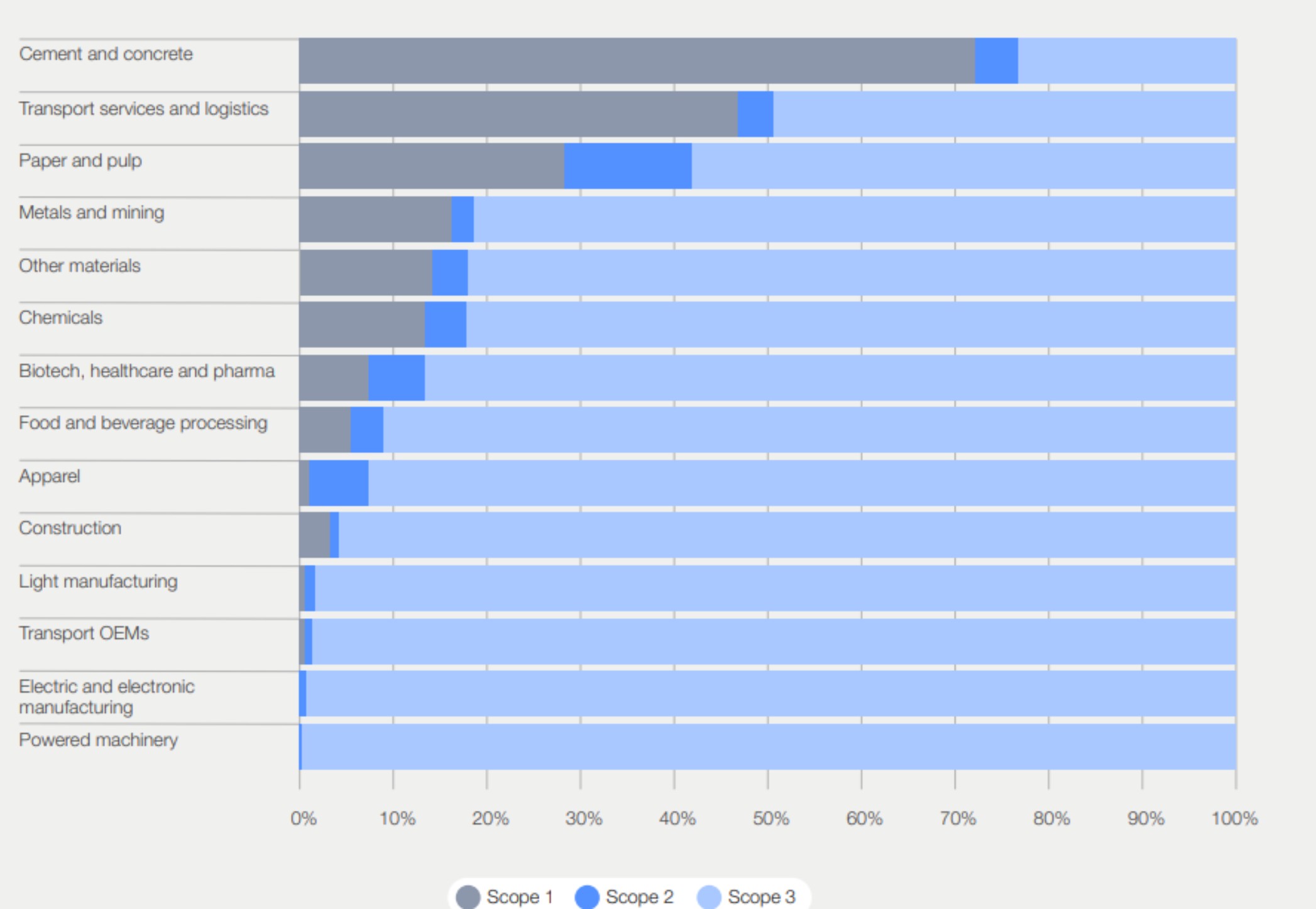
This means that whilst it is likely that an individual SMEs environmental or social footprint is limited, the collective impact of millions of SMEs across global supply chains cannot be understated. In sectors like manufacturing, agriculture, logistics, and retail, SMEs make up a substantial portion of upstream and midstream suppliers. For example, it is known that a significant share of GHG emissions across multiple sectors come from "Scope 3 Emissions", i.e., the GHG emissions that occur outside a company's direct operations, in their upstream and downstream supply chain. Effectively managing these emissions requires active engagement with suppliers, making it nearly impossible for any business pursuing a meaningful decarbonisation strategy to not be engaging with their SME suppliers.
Multinational Corporation Focus
Beyond the collective impact on sustainability that SMEs have, MNCs are increasingly focused on understanding the sustainability characteristics of their own supply chains due to several factors:
- Governments are implementing laws that hold companies accountable for sustainability-related impacts throughout their supply chains. Leading examples include the EU's Corporate Sustainability Due Diligence Directive (CSDDD) and similar legislation like the UK Modern Slavery Act and Germany's Supply Chain Due Diligence Act.
- Modern supply chains are intricate and span multiple tiers, often across regions with varying standards and oversight. This complexity obscures sustainability risks, such as labour abuses or environmental hazards, especially within lower-tier suppliers.
- Consumers, investors, and regulators increasingly expect sustainable supply chains. Brands failing to manage sustainability risks face reputational damage, with consequences for revenue, stock price, and talent acquisition.
- Sustainability is understood to be an essential component of supply chain resilience, enabling better adaptation to potential disruptions such as pandemics, climate events, or geopolitical shifts.
Public Procurement Demands
The growing focus on supply chain sustainability also extends beyond the private sector, with public procurement sector procurement integrating sustainability criteria into their own tendering processes. In the UK, for example, PPN 06/21 mandates that suppliers bidding for major government contracts, above £5 million per annum, must provide a Carbon Reduction Plan confirming their commitment to achieving Net Zero by 2050. Similarly, the EU's Green Public Procurement framework encourages public authorities to buy goods, services, and works with a reduced environmental impact throughout their life cycle. It provides sector-specific criteria and guidance that cover areas such as:
- Energy efficiency
- Waste reduction
- Sustainable material sourcing
- Eco-labels and certifications
Therefore, whilst MNCs and public sector bodies may have multiple drivers for prioritising sustainability, such as regulatory compliance, investor pressure, and brand reputation, for SMEs, this ultimately boils down to competitiveness.
SMEs with the ability to effectively support clients with their own strategic, regulatory and reporting requirements, will cement their place as a valued and trusted partner in global supply chains. SMEs that don't keep pace will find themselves overlooked and cut off from global supply chains, limiting their ability to generate revenue and pursue growth opportunities.
What are SMEs Doing Now?
Many SMEs are aware of the importance of integrating sustainability within their business operations. A 2023 survey of 16,000 SMEs by Sage, PwC UK, ICC, and Strand Partners found that 83% consider sustainability to be important for their business operations. In the same study, 58% of SMEs reported making informal sustainability commitments to customers, investors, or employees, indicating a growing recognition of stakeholder expectations and reputational value. However, despite this high level of awareness, only 7.7% of SMEs said they engage in structured sustainability reporting.
The limited adoption of formal reporting practices stems from several barriers. For instance, 73% of SMEs cited the financial burden of sustainability initiatives and reporting as a significant obstacle to progress. In addition, 65% reported that the complexity of current reporting standards made it difficult to engage meaningfully with sustainability frameworks. Beyond cost and complexity, many SMEs also lack the internal expertise or resources to effectively manage their sustainability data collection and reporting process.
The VSME Reporting Advantage
Although there is a clear gap between ambition and data collection & reporting, this is quickly changing, with particular emphasis on streamlining and simplifying the latter. One way that SMEs can act now is by completing the Voluntary Sustainability Reporting Standard for SMEs (VSME). VSME is a simplified reporting framework designed by the EU specifically for non-listed small and medium-sized enterprises. It provides a clear, manageable way for SMEs to collect and disclose sustainability data, without the resource burden of complex sustainability reporting frameworks.
VSME includes General Requirements and metrics related to Environmental, Social, and Governance topics. These disclosures are divided into two modules.
- Basic Module: A quick and simple option that covers key environmental topics, workforce-related metrics, and issues such as corruption and bribery to meet standard reporting expectations.
- Comprehensive Module: A more detailed set of metrics to support SMEs aiming to meet the expectations of large buyers, improve transparency, and support access to sustainability-linked opportunities such as green finance or investment.
Sustainability is a Strategic Imperative
The sustainability landscape is evolving, but it's not going away. For SMEs, sustainability reporting is less about compliance but more about competitiveness. VSME provides a practical, accessible way to meet the expectations of larger partners, while also building a more resilient and forward-looking business. Those that do stand to benefit from enhanced reputation, deeper integration into value chains, preferential procurement opportunities, and long-term competitive advantage.
How can NorthPeak Advisory help with VSME?
NorthPeak Advisory offers a streamlined, technology-enabled solution to help SMEs confidently report in line with the VSME framework. Our proprietary sustainability management platform, ASAP (Advance Sustainability Accounting Platform), is designed to simplify the complexity of sustainability reporting, eliminating guesswork and reducing the burden on your internal teams. Supported by our team of sustainability experts, we guide you through steps needed to collect, structure, and submit the data your customers and stakeholders need.
Whether you're new to sustainability reporting or looking to align with evolving supply chain expectations, our intuitive platform makes the process fast, efficient, and accessible, all without the need for any technical expertise.